About Us

A community built on research, collaboration, and real operational need: drone that share the same skies and choose to coordinate, transparently and by consensus.

How it started

Scale and Operational Need

In late 2023 and early 2024, drone delivery scaled rapidly in the greater North Texas area. Several operators flying in the same Dallas-Fort Worth airspace recognized an inherent need: they had to communicate with one another to fly safely.

Building on earlier FAA and NASA work, the UTM Field Test, the UTM Pilot Program, and NASA UTM Technical Capability Levels, an initial consortium of operators and service providers set out to operationalize strategic conflict detection together.

That effort became the Shared Airspace UTM Consortium. It's designed to apply anywhere in the US where operators have the need and permissions to share airspace.

Where it is today

Live and growing

As of January 2026, the consortium includes 17 service provider and operator participants using the USS network to support drone operations in several parts of the country. Simulations representing true "day-in-the-life" operations have progressed to live flights.

Recognition: In March 2025, Virginia Tech's Mid-Atlantic Aviation Partnership completed an Initial Operationalization Report, approved by the Operations Committee and made public.

In October 2025, many members submitted joint comments supporting the consortium's work in response to the FAA's proposed rule for normalizing BVLOS operations.

How decisions get made

Governed by consensus, with equal votes

Two committees run the implementation. Every member gets an equal voice, governance is transparent and fair by design.

Operations Committee

Owns onboarding, policy, and the day-to-day governance of the consortium, including how members join, how disputes are resolved, and how policies like prioritization evolve. This is your first point of contact.

Technical Committee

Owns the technical roadmap, the service requirements, automated test baselines, and reviews of security, privacy, and quality attestations. It approves the standards every member is tested against.

What the governance agreement covers. Three things: (1) what data can be exchanged and how it can be used, (2) how others can join, and (3) what happens when a member isn't performing as expected. New participants get observer status in both committees as soon as their signed agreement is processed.
Open by default

An open-source approach

The consortium governance, processes, and policies lives in a public GitHub repository. That promotes an open solution, keeps the process transparent, and lets the consortium fold in new data and learnings over time.

The consortium has also evaluated and integrated open-source tools and documents from the Global UTM Association and the InterUSS Platform (Linux Foundation).

Browse the public resources →
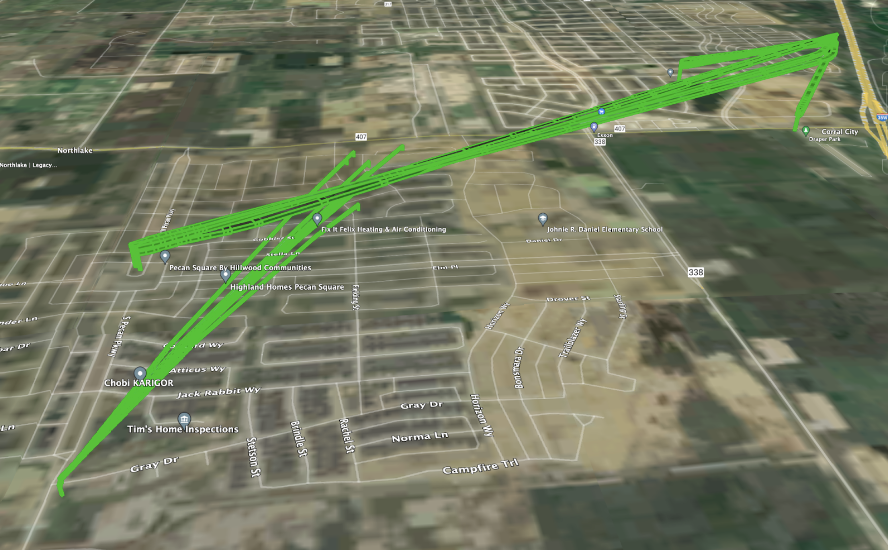
Simulation of overlapping drone operations

Want to be part of it?

Participation is open to UTM service providers and their operators, private and public organizations alike.

See how to join →